
How to Choose the Right Cold Plunge Size for Your Space
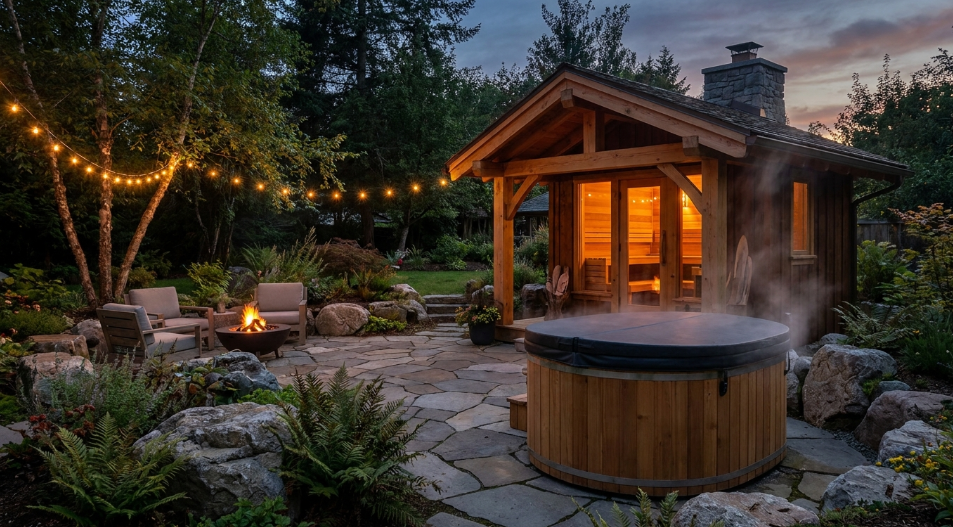
A single-person cold plunge needs roughly a three-by-three-foot footprint and 150 to 200 gallons, while a two-person unit needs closer to four-by-five feet and 300 gallons or more, plus at least eighteen to twenty-four inches of clearance around the entry side and the chiller for safe stepping and servicing. Ceiling height rarely matters for outdoor placement but becomes a real constraint for garages or basements with low overhead.
How Many Gallons Do You Actually Need?
Gallon capacity tracks with how many people use the plunge and how submerged they want to be. A single-person round or oval tub in the 150 to 200 gallon range covers shoulder-depth immersion while seated, which is what most home users actually want. Going smaller saves floor space but often means only submerging to the waist or chest, which changes the experience meaningfully for anyone specifically after full-body cold exposure. Deeper tanks in the 250 to 300 gallon range exist mainly for taller users or anyone who wants to stand rather than sit, and that extra depth adds real weight once filled, which matters for anything placed on a deck or an upper-floor balcony rather than a slab or ground-level patio.
What Footprint Does a Single-Person Plunge Require?
Most single-person tanks fit inside a three-by-three-foot square, with round designs sometimes edging slightly smaller. That is a genuinely small footprint, comparable to a large planter or a compact hot tub, and fits on most patios, in a garage corner, or against an exterior wall without major reconfiguring of the space around it. Round tanks tend to tuck into corners a little more efficiently than square ones, since a square unit needs full clearance on all four sides to look intentional rather than wedged in.
Can Two People Actually Use the Same Cold Plunge?
Some models are built wide enough for two adults to sit side by side, typically requiring a four-by-five-foot footprint or larger and 300 or more gallons. This adds real cost and space demand, and most households considering it are better served pricing two single-person units against one shared unit before deciding, since a shared tank means only one person plunges at a time anyway unless the model is specifically built for simultaneous use. Two smaller units also give each person control over their own target temperature, which a single shared tank cannot do, and that flexibility is worth weighing against the extra floor space two units require.
Does Ceiling Height Matter for a Cold Plunge?
Outdoors, essentially never. Indoors, it matters more than most buyers expect, particularly in a garage or basement with ductwork, low beams, or a sloped ceiling. Measure the actual clearance above the intended spot, not just the general room height, since a beam or vent a few feet to the side of an otherwise tall space can still block delivery or make entry awkward.
Will It Fit Through Your Doorway or Gate?
Rigid tank cold plunges do not fold or collapse for delivery the way an inflatable tub does, so the path from the driveway to the final spot, including every doorway, gate, and stairwell along the way, needs to be measured before ordering. This is the single most common sizing mistake, buyers picking a tank that fits the intended spot perfectly but never accounting for the hallway or side gate it has to pass through first. Measure the narrowest point along the entire route, including stair landings and door hinges that eat into the usable width, and compare that number against the tank’s widest dimension, not just its footprint on the floor.
How Much Clearance Does the Chiller Unit Need?
A chiller needs airflow on at least two sides to avoid overheating its own compressor, plus enough open space for a technician to service it later without disassembling a deck or fence panel. Eighteen to twenty-four inches of clearance around the unit is a reasonable minimum, more in an enclosed space with limited natural airflow. Some owners tuck the chiller into a small vented cabinet or bench to hide it visually, which is fine as long as the vents are sized to the manufacturer’s airflow spec rather than added purely for looks, since a chiller that cannot breathe will simply run longer and wear out sooner.
What If Your Space Is Genuinely Tight?
Small-footprint and inflatable options exist specifically for apartments, balconies, and narrow side yards, trading some capacity and chiller power for a smaller physical presence. Filtering a catalog by dimensions rather than price alone is the fastest way to find what actually fits, since two units at the same price point can have meaningfully different footprints. It helps to browse the collection by tank size and chiller footprint side by side rather than judging fit from a single product photo, which rarely shows scale accurately.
What Does the Research Say About Cold Exposure?
Interest in home cold plunging has grown alongside interest in sauna bathing, and the two are often discussed together in the same body of thermal stress research. A review examining both heat and cold exposure, with particular focus on Finnish sauna practices, found consistent physiological response patterns worth noting across both types of exposure, though the strongest and most consistent cardiovascular associations in that literature come specifically from regular sauna use rather than cold immersion alone. A broader review of sauna bathing benefits reached similar conclusions about repeated thermal stress and cardiovascular markers over time. Cold-water immersion research specifically remains mixed, particularly around whether it helps or actually blunts strength and muscle adaptations after resistance training, so sizing a plunge around daily post-workout use is worth weighing against that open question rather than assuming more exposure is automatically better.
Frequently Asked Questions
What size cold plunge do I need for one person? Typically 150 to 200 gallons within a three-by-three-foot footprint, deep enough for shoulder-height immersion while seated.
How much clearance should I leave around a cold plunge? At least eighteen to twenty-four inches on the entry side and around the chiller for airflow and service access.
Can a cold plunge fit in an apartment or condo? Yes, with planning. Confirm balcony weight limits and building rules on standing water before ordering.
Does a bigger cold plunge cool down slower? Yes, all else equal. More gallons means more thermal mass, so a larger tank generally needs a more powerful chiller to hit the same target time.
References
- Effects of heat and cold on health, with special reference to Finnish sauna bathing, American Journal of Physiology, 2018
- Cardiovascular and Other Health Benefits of Sauna Bathing: A Review of the Evidence, Mayo Clinic Proceedings, 2018
- Does the Combination of Finnish Sauna Bathing and Other Lifestyle Factors Confer Additional Health Benefits? A Review of the Evidence, Mayo Clinic Proceedings, 2023